Generalization in ABA: Helping Skills Stick Everywhere
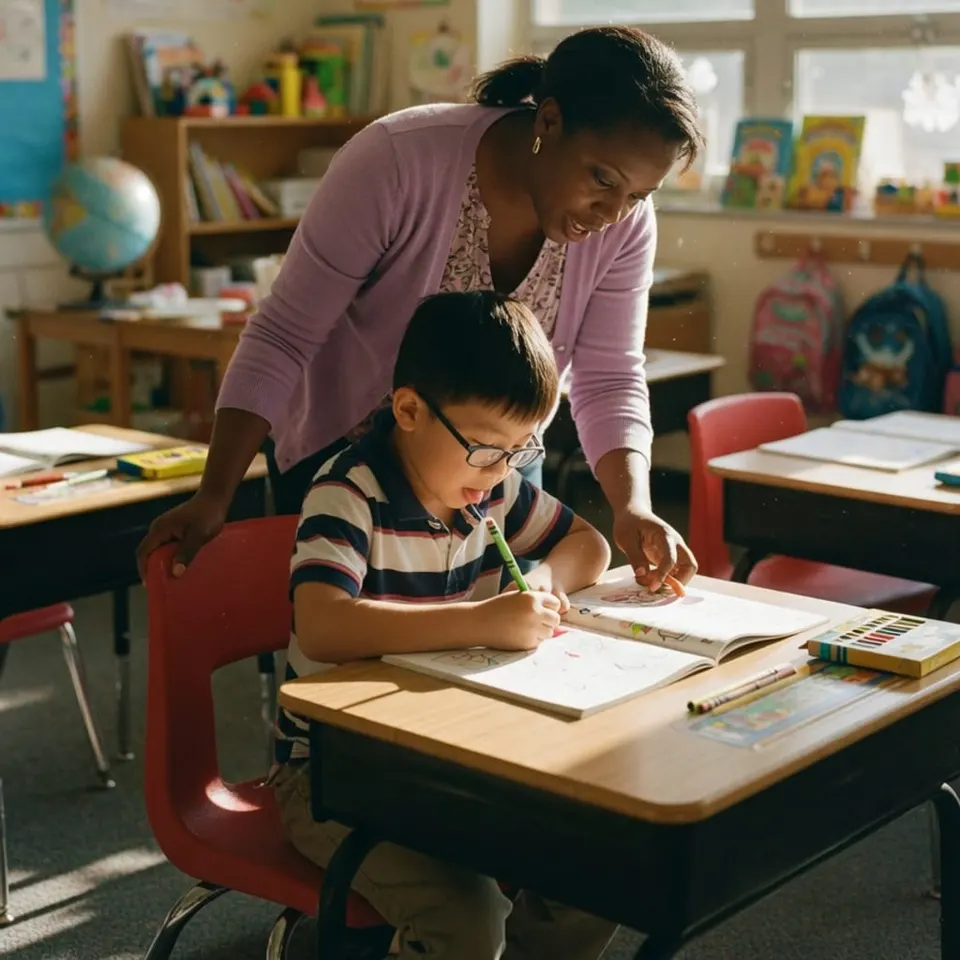
In short: Generalization means a child uses learned skills in different settings, not just where taught. BCBA therapists build generalization into programs from day one. Parents can boost progress by practicing in real-world situations, and our free matching service connects you with BCBA-led providers who prioritize this.
Key takeaways
- Generalization is the ability to apply ABA-taught skills across people, places, and materials, not just during therapy sessions.
- Board Certified Behavior Analysts (BCBAs) plan for generalization by varying instructions, settings, and reinforcers from the start.
- Parents play a crucial role by practicing skills in natural environments like grocery stores, playgrounds, and family gatherings.
- Fading prompts and teaching self-monitoring help children become independent and flexible with their skills.
What Is Generalization in ABA Therapy?
Generalization is the heart of meaningful progress in Applied Behavior Analysis (ABA) therapy. It's when a child with autism uses a skill-like requesting a break, following a two-step instruction, or initiating a greeting-in a different situation than where it was originally taught. For example, a child who learns to ask for help in a clinic room alone might later ask for help at the dinner table, on the playground, or when a babysitter is present. This transfer of learning across people, places, materials, and times is what makes ABA truly life-changing.
Nearby ABA Therapy is a free service that matches families with BCBA-led providers who prioritize generalization from the very first session. Because generalization isn't just an add-on; it's a core component of effective, ethical ABA.

🔗 Related reading: ABA with Speech & OT: What Parents Need to Know · Get ABA Therapy
Why Generalization Matters for Children with Autism
The ultimate goal of ABA is to help children become as independent and socially included as possible. A skill that only works in one room with one therapist is not a functional skill. Children may master a task in a structured teaching setting but appear to 'lose' it when the environment changes. Without generalization, therapy gains stay boxed up, and real-world improvement is limited.
Research shows that children who generalize well experience better long-term outcomes in communication, adaptive behavior, and social relationships. Generalization also reduces the need for constant prompting, allowing children to act with more autonomy. For families, this means smoother mornings at school, safer behavior at the park, and more connected moments at home.
Types of Generalization in ABA
Stimulus Generalization
Stimulus generalization is when a child responds correctly to similar but slightly different cues. For instance, if a child learns to identify a red circle on flashcards, stimulus generalization means they also identify a red circle drawn on a whiteboard, a red rubber ball, or a picture of a red stop sign. The core skill (recognizing a red circle) transfers across varied examples.
Response Generalization
Response generalization happens when a child learns one response and then naturally uses variations of that response in appropriate circumstances. For example, a child who learns to say "hello" might also generalize to saying "hi," waving, or smiling-all acceptable greetings. This flexibility is a hallmark of true mastery.
Setting / Environment Generalization
This is the most commonly discussed type: performing a skill in different physical environments-home, school, clinic, community. A child who can wash hands in the therapy room but not at a rest stop needs setting generalization to become truly independent.
Person Generalization
Skills that work with one therapist or parent but not with another have not generalized across people. ABA programs deliberately involve multiple communication partners (teachers, siblings, grandparents) so the child learns to respond regardless of who is asking.

🔗 Related reading: School vs Clinic ABA: Pros & Cons for Families · Autism Therapy Near Me
How BCBA Therapists Plan for Generalization
Teaching Loosely
BCBAs avoid using identical instructions each time. Instead of always asking "What color is this?" they might vary the phrase: "Tell me the color," "Show me the red one," or "What do you see?" This prevents the child from memorizing a single script.
Using Multiple Exemplars
Teaching across many examples-different types of shoes when learning to tie, various dogs when learning to point to "dog"-helps the child grasp what is essential (the skill) versus what is incidental (the specific shoe or dog).
Programming Common Stimuli
Materials used in sessions are often chosen to match what the child encounters daily. If the child needs to use a fork at meals, the therapy fork resembles the home fork. BCBAs may borrow photos from the child's school or use real clothing from their closet.
Fading Prompts Systematically
Prompt dependency is a major barrier to generalization. BCBAs start with strong supports and then systematically reduce them (e.g., from full physical guidance to a light touch, then to a gesture) so the child responds to natural cues, not artificial prompts.
Teaching Self-Management
Older children may be taught to self-monitor: "Did I use my coping strategy today?" This internalizes the skill and makes generalization more likely across situations where no therapist is present.
The Parent's Role: Generalization Happens Everywhere
Parents are the bridge between therapy sessions and the real world. You don't need a BCBA credential to help. Here are practical ways families can support generalization:
- Practice in natural contexts: If your child is learning to request a break, practice during homework time, after a loud noise, or at a busy store-not just during a calm moment at the table.
- Vary caregivers: Ask another family member or a trusted babysitter to run a familiar routine while you observe. This builds flexibility across people.
- Mix up locations: You can target the same skill at grandma's house, in the car, at the library, and during bath time. Change the chairs, the lighting, the distractions.
- Use natural consequences: Instead of giving a treat for saying "please," let the natural result be getting the drink they asked for. That real-world reinforcement is powerful.
- Keep notes and share successes: BCBAs love hearing where generalization clicked (or didn't). This data shapes the next phase of the program.
Nearby ABA Therapy helps match families with providers who actively train parents in these strategies-our member providers treat parents as partners, not observers.

Common Challenges and How to Overcome Them
Skill Only Happens with Food Reinforcement
If a child only performs a skill when a favorite snack is visible, the skill isn't generalized. The BCBA will likely thin the schedule of edible reinforcers and start pairing social praise or natural rewards. Parents can help by offering varied, unpredictable rewards.
Prompt Dependency
A child who always glances at mom before answering isn't truly independent. Work with the BCBA to implement a prompt hierarchy and ensure that family members all follow the same fading plan. Consistency across caregivers is essential.
Regression After Session Changes
Sometimes skills fade when therapy frequency reduces or a technician changes. This is normal. Stressing generalization early-teaching across many people and settings-builds resilience. If you see regression, reach out to the BCBA to revisit the generalization plan.
New Behaviors Appearing
Rarely, a child may generalize a skill in an unexpected way (e.g., saying "break" too often). This is an opportunity to refine the program. No need to panic; collaboration with the BCBA solves these issues.
Insurance Coverage and Access to Generalization-Focused ABA
ABA therapy, including generalization training, is covered by most major insurance plans and state Medicaid programs (such as your state's Medicaid waiver for autism services). Since generalization strategies are woven into standard ABA, you are already entitled to this component when you have a valid ABA benefit. However, the quality of generalization planning varies by provider.
Nearby ABA Therapy's free matching service connects you exclusively with BCBA-led providers who demonstrate a strong commitment to generalization. When you fill out our intake form, you'll see options to prioritize "real-world skill use" and "parent training"-both key indicators. Our vetted providers accept a wide range of insurance plans, and many also participate in early intervention programs. There is no cost to families for the matching service.
How Nearby ABA Therapy Can Help
We understand that finding an ABA provider who truly emphasizes generalization is challenging. That's why we've built a network of respected BCBAs who believe that skills belong everywhere, not just on a table. Our free matching process takes your child's age, diagnosis, location, and insurance into account, pairing you with a provider who has a proven track record of generalization outcomes.
After your match, you'll have a consultation where you can directly ask how the BCBA plans to teach across settings, fade prompts, and involve your family. We encourage you to share this article with your provider as a starting point for conversations about generalization goals. Because when skills stick everywhere, children with autism can thrive anywhere.